Run more homes with the team you have.
One system for leasing, accounting, maintenance, pricing, owners and residents, all on the same records. AI does the routine work, from answering leads to reconciling trust accounts, and you approve what matters.
No credit card · Full product · Sample data included
$5 per unit, everything included · Book a demo
- 7:17 AMResidentsRent reminders sent12 residents · inside sending hoursDone
- 7:14 AMAccountingTrust ledger reconciled18 owner ledgers · difference $0.00Done
- 7:11 AMPricingNew 2-bed price ready: $1,885Waiting for your approvalYour call
- 7:08 AMMaintenanceLeak reported with photosWork order #912 opened as urgentDone
- 7:05 AMLeasingLead answered in 9 secondsTour booked Thu 5:30 PMDone
- 7:02 AMAccountingAutopay collected $1,885Unit 402 · The HarlowDone
- Occupancy97%580 of 600 rentable units
- Rent collected this month$1,036,973Last 14 days
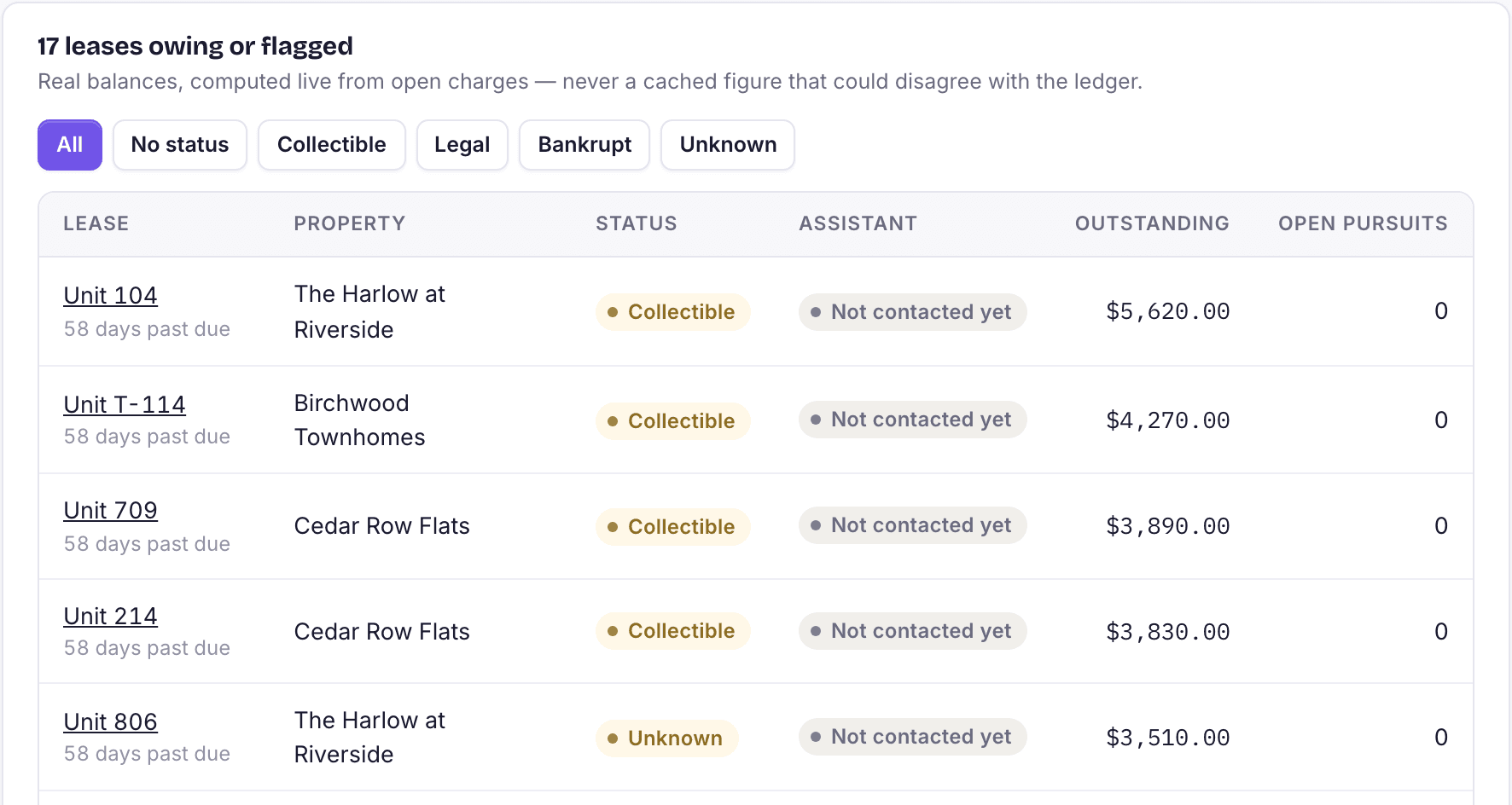
- Delinquent balance$44,819Outstanding past due
- Open work orders50Across all properties
- Net operating income$1,041,736Month to date
- Collections rate97.5%Of charges billed this month
- Delinquency rate4.2%Of charges billed this month
- Days to lease25.2 d54 records in window
What changes on day one
- Every lead answered by text, email and phone, with tours booked
- 24/7
- Leasing, accounting, maintenance, pricing, owners and residents on the same records
- 1 system
- Every feature included. No add-ons, no tiers, no fees from us on rent payments
- $5/unit
- Trust ledgers reconciled every day, not in a month-end scramble
- Daily
- Switching: we move your data and tie it back to your old trial balance
- Free
One system
Everything you run, in one place.
Eight areas that share one set of records. No second login, no re-typing, no add-ons.
Leasing, around the clock
Every lead answered. Even at 9 PM on a Sunday.
The lead who waits until Monday has already toured somewhere else. StrivBridge replies in seconds by text, email and phone, answers from your real availability and prices, and books the tour.
- Answers leads by text, email and phone, and books tours
- Follows up with quiet leads and stops the moment they reply
- Helps residents with requests, balances and renewals
- Anything that moves money or changes a lease waits for you, and every AI decision is in the audit log
SMS · (720) 555-0142
Hi! Any 2 bedrooms at The Harlow for November? Budget is around $1,900.
Hi Maya, I'm Harper, the AI leasing assistant for The Harlow. Unit 402 is a 2-bed, 1,020 sq ft, $1,885 on a 12-month lease, ready Nov 1. Want to see it?
Rivr, the AI assistant for your team
Ask for it in a sentence. Rivr builds it.
Reports, workflows, answers and changes from one box on every page. Rivr works from your real records with your permissions, and nothing changes until someone approves it.
- Reports and charts from a sentence, which you can edit by hand
- Workflows from a sentence, with a dry run before they switch on
- Learns how your company works: instructions, memory and saved procedures
- Every change shown as before and after, then approved by a person
Every AI feature is in the $5 plan.
Elsewhere, AI is often a higher tier or an add-on. Here it comes with every unit.
- AI leasing agentAnswers leads by text, email and phone, and books tours
- Resident assistantFiles work orders, sends pay links and books amenities
- Collections remindersThe real balance, a pay link and a payment plan inside your limits
- AI pricingA price for every unit type each morning, from your own data
- Rivr, staff assistantAnswers questions about any record and drafts changes
- AI report builderDescribe a report, get a working one from your data
- AI workflow builderDescribe an automation, check the dry run, switch it on
- Call summariesEvery call transcribed, summarized and filed to the record
Says it is AI on every channel · Fair-housing tested · Every AI decision in the audit log
No double entry
Type it once. Every department has it.
No more copying a new lease into the accounting system, the resident portal and the owner report. Every area reads the same records, so one signature moves the whole business along.
- 1Leasing
A lease is signed
E-signed from the application, with the unit, rent and deposit already on it.
- 2Accounting
The ledger is set up
Rent, fees and the deposit are on the lease, so the next charge run bills them correctly.
- 3Residents
The resident gets their app
One click sends the portal invite: pay rent, set up autopay and report issues from a phone.
- 4Maintenance
Move-in is scheduled
The move-in checklist and inspection are waiting for your team.
- 5Owners
The owner sees it
Rent collected and the new lease show up on the owner's statement.
- 6Pricing
Renewal, 120 days out
A renewal offer priced for this resident, ready for you to send.
Accounting
Month-end without the scramble.
Payments post as they arrive, collections show exactly who owes what, and trust ledgers reconcile every day. By month-end the books are already done. You review and sign off.
- Autopay, online rent and payment plans
- Trust accounting with owner ledgers
- Owner statements and payouts in one run
Revenue management
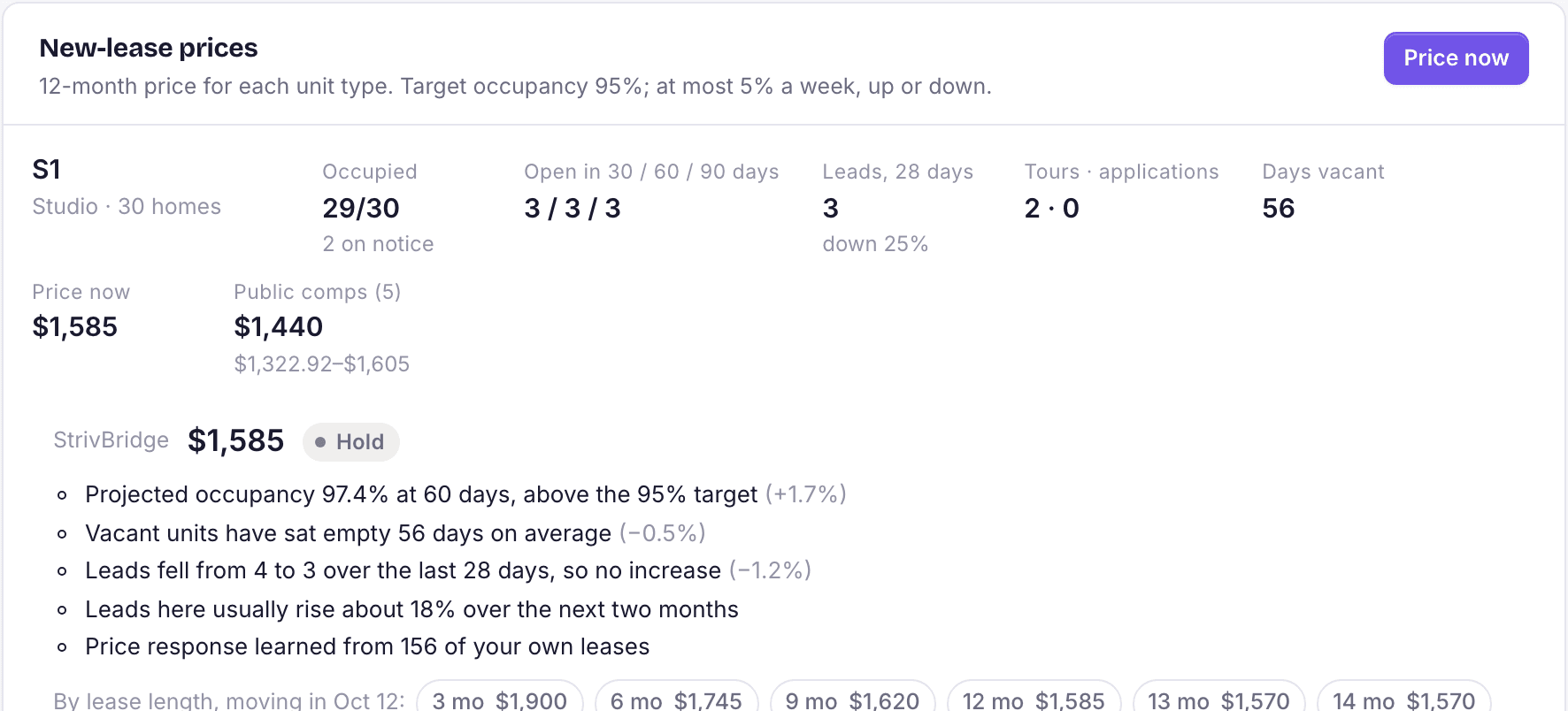
Stop guessing at rents. New prices every morning.
Each unit type gets a recommended price with the reasons in plain English, built from your own leasing activity and never pooled with anyone else’s. Usually a separate product. Here it’s included.
- Lease-length pricing and renewal offers
- Approve, edit or let small changes apply
- Bring your own model if you have one
Resident app
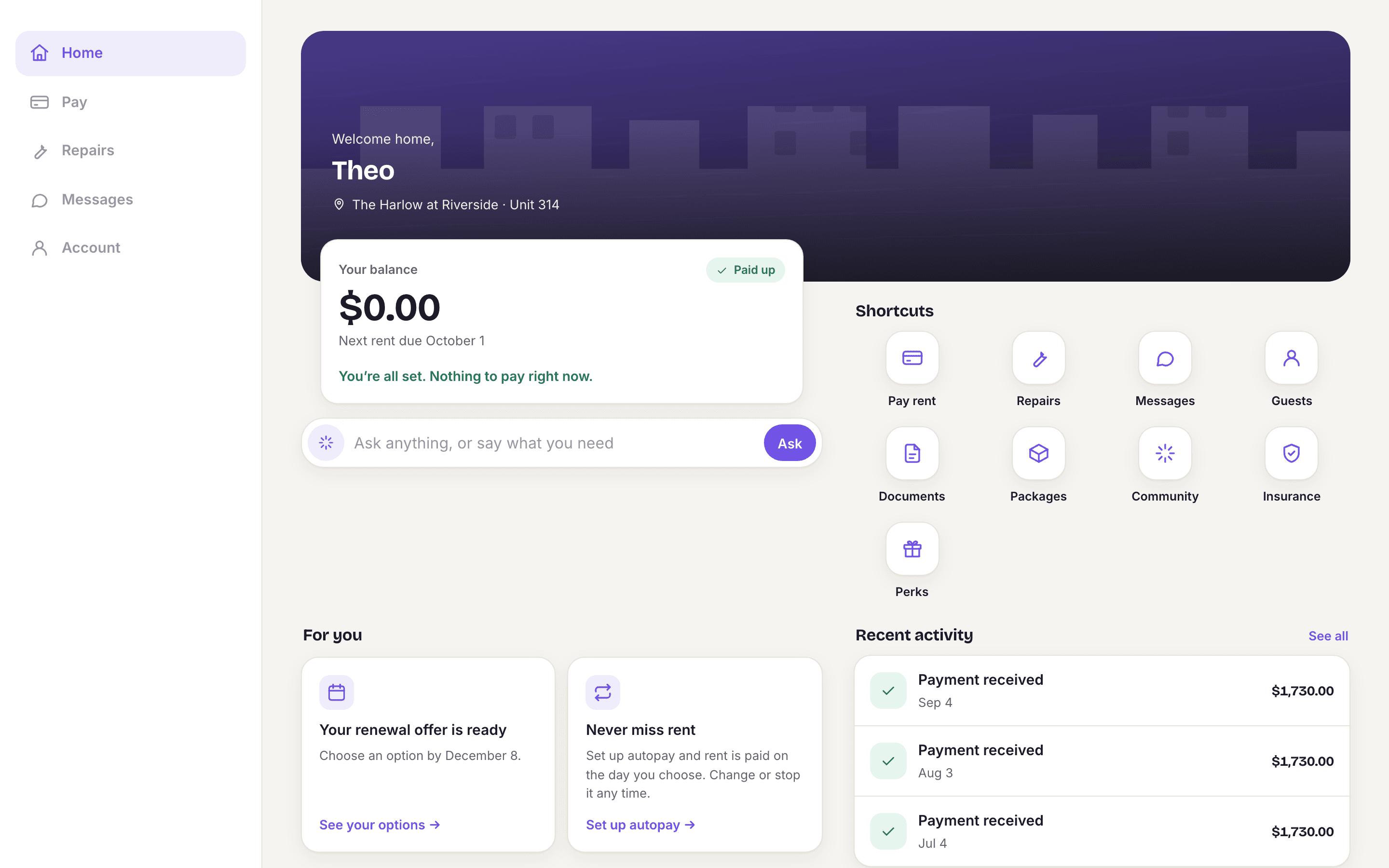
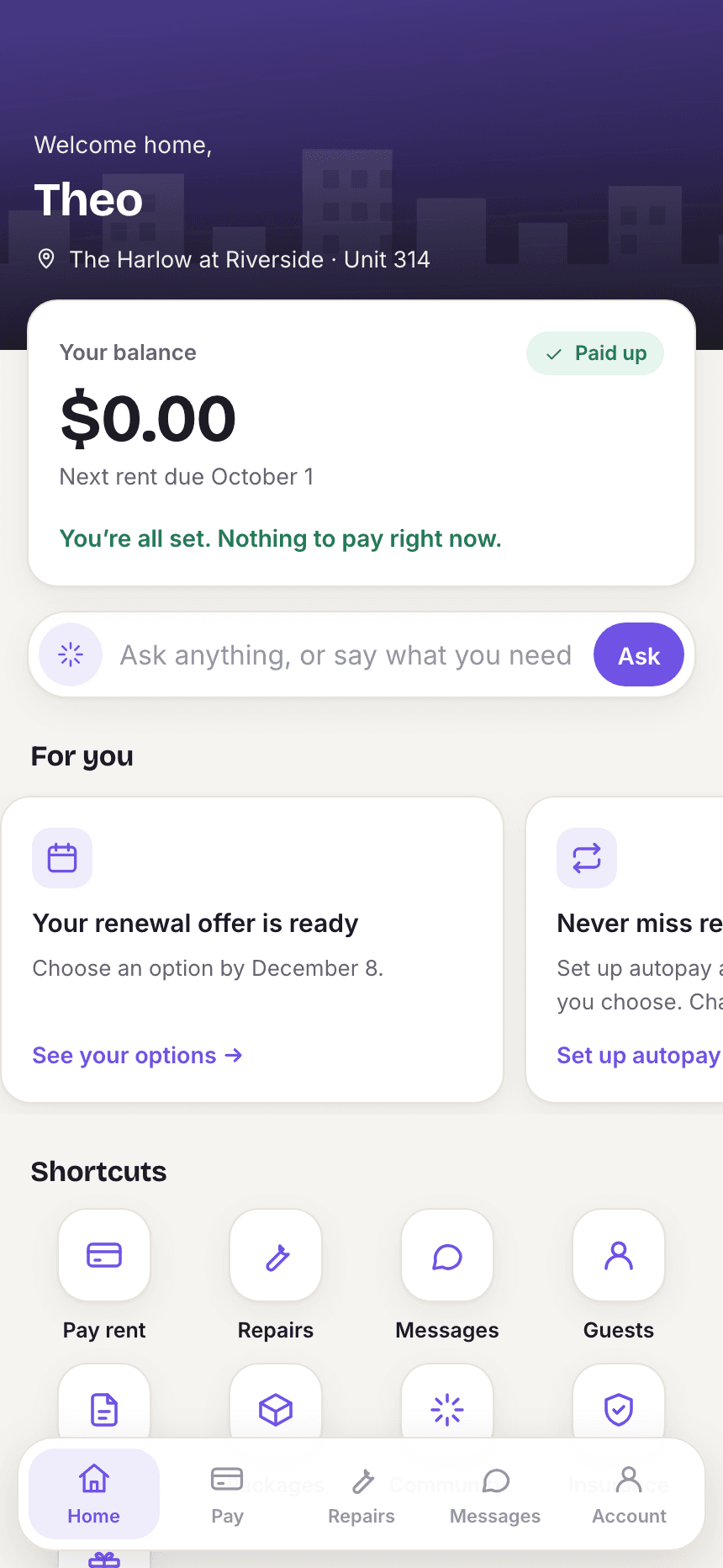
An app residents actually use.
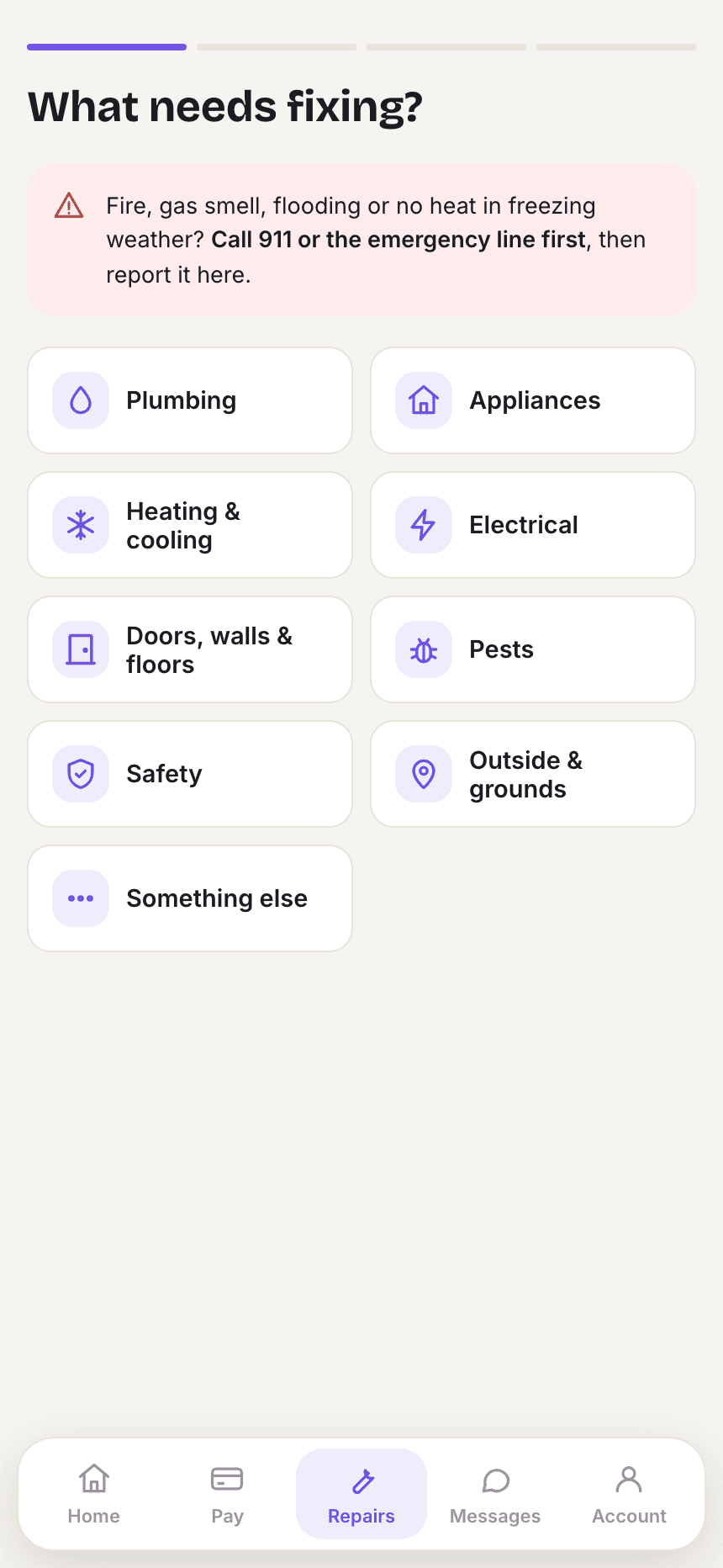
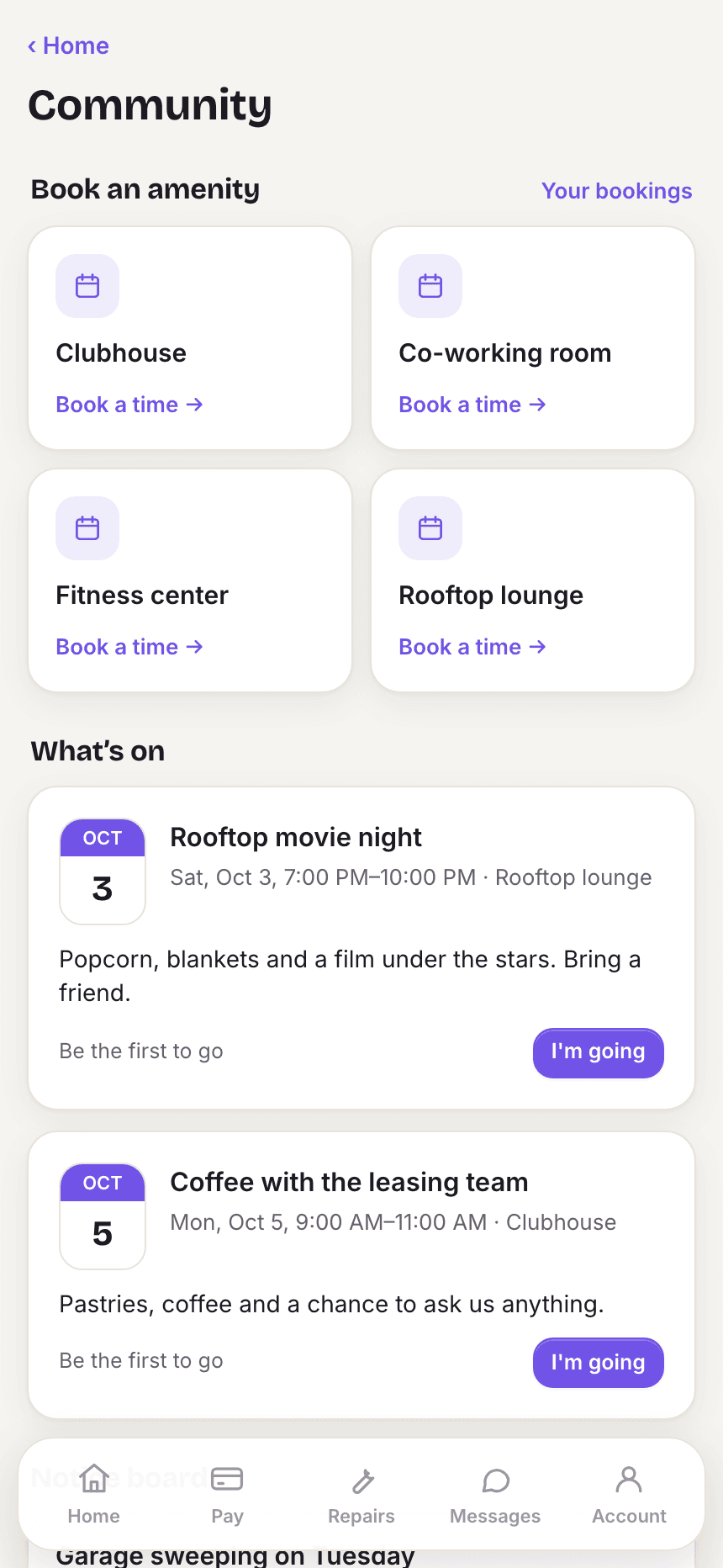
Rent, repairs, renewals, guests and amenity bookings in one place, with your logo and colors. The same app on a phone, a tablet or a computer, so questions get answered before anyone calls the office.
Pricing
One price. Nothing to add on.
AI leasing, revenue management, accounting and the resident and owner apps are all in the plan. No tiers to outgrow, no add-on quotes.
$5 per unit, per month
$65 monthly minimum. Every feature, one plan. Month to month, and a 30-day free trial with no credit card.
| StrivBridge | AppFolio | Buildium | |
|---|---|---|---|
| Published pricing | Yes$5 per unit per month, everything included | NoNo; plans are quoted (Core, Plus, Max) source | YesYes: Essential from $62, Growth from $192, Premium from $400 per month source |
| Free trial | Yes30 days, no credit card | NoNo free trial listed; demo on request source | Yes14 days, no credit card source |
| AI leasing agent | YesIncluded: text, email and voice | PartlyRealm-X Leasing Performer (text, email, phone), built into Leasing CRM, which is listed on Max source | Add-onLumina AI Workforce agents priced separately by account source |
| Transaction fees | Processor fees onlyNo per-transaction fees from StrivBridge; payment processor fees may apply | Not publishedNot published | Per-transaction feesIncoming EFT $2.35 (Essential), $1.35 (Growth); cards 2.99%; eSignature $5 or $1 per document; screening $17 to $35 source |
- Month to monthNo annual contract. Cancel any time. Paying yearly? Ask us for the annual rate.
- Free migrationWe move your data from your current system and tie the balances back before you go live.
- Your data leaves with youDownload everything, any time: every record as a spreadsheet and every stored document, in one file. No ticket, no fee.
Switching
We move your data. You check it.
Switching is the part everyone dreads, so we do the work, free. And if you ever leave, your data leaves with you.
Moving from AppFolio, Buildium, Yardi or Rent Manager? See how the move works
- ExportWe take the export from your current system: properties, units, residents, leases, balances, deposits and owners.
- Load and tie outEverything is loaded into your company and the balances are tied back to your old trial balance.
- Check togetherYou review rent rolls and ledgers side by side before anything goes live.
- Go livePick a cutover date. Residents get their app invites and your team starts working.
Security
Your data stays yours.
- Each company’s data is isolated at the database level
- Authenticator-app two-factor sign-in, which admins can require for all staff
- A log of every sign-in and security event, and an audit log of every AI decision
- Pricing never pools your data with other companies
Solutions
Built for how you manage.
Fill every unit with fewer hands.
Leads from your listing sites on one board, an AI assistant that answers them around the clock, prices set from your own leasing data, and books that close without spreadsheets.
For single-family rentalsScattered homes, one tidy system.
Every home, owner and vendor in one place. Prospects tour on their own schedule, maintenance goes straight to the right vendor, and owners see their statements without calling you.
For commercial portfoliosCommercial leases, without the spreadsheets.
The year-end reconciliation, the insurance certificates, the option deadlines and the percentage rent that usually live in a spreadsheet next to your accounting system, all in the system that bills the rent.
For mixed-use buildingsApartments upstairs, shops downstairs.
Residential and commercial leases in the same building and the same books. CAM recovery, percentage rent and trading names for your retail tenants, and the full leasing office for your apartments.
Questions
What managers ask us.
How much does StrivBridge cost?
$5 per unit per month, with a $65 monthly minimum. That one price includes every feature: leasing, the AI assistant, revenue management, accounting, maintenance, analytics and the resident and owner apps, plus onboarding and data migration.
Is there a contract?
No annual contract. StrivBridge is month to month and you can cancel any time. If you would rather pay yearly, ask us for the annual rate.
What happens to my data if I leave?
It leaves with you. An administrator can download everything, any time, from Settings: every record as a spreadsheet and every stored document, in one file. There is no fee to leave and nothing to buy back.
What do I get in the 30-day trial?
The full product, not a cut-down version: leasing, the AI assistant, pricing, accounting, maintenance, analytics and the resident and owner apps. Your trial company comes with sample properties and residents so you can click through real workflows on day one. No credit card.
Do I have to buy add-ons for AI or pricing?
No. There is one plan and it includes the AI assistant, revenue management, analytics and the portals. If you choose to buy data from a partner, like a market-data provider, that is between you and them.
How long does switching take?
Most of the work is ours. We load your properties, residents, leases, balances, deposits and owners, tie the balances back to your current system and review them with you before you pick a go-live date.
Can the AI agent make mistakes on my behalf?
It works from your real availability, prices and policies, tells people it is AI, and by default anything that moves money or changes a lease waits for a person to approve it. Every message and action is on the record, and anyone on your team can take over a conversation.
Where does the pricing data come from?
From each property's own leasing activity: tours, applications, days vacant and lease expirations. Public comps you enter act only as guardrails, and your data is never pooled with another company's.
Do residents need to download an app?
No. The resident and owner portals work in any phone browser and can be added to the home screen. Residents can pay, set up autopay, report issues and sign renewals.
How do my team learn it?
The StrivBridge Academy has step-by-step courses for every role and practical guides for everyday jobs. It is free with an Academy account, customer or not.